Construction
October 6, 2026
DPR for Construction Projects: Meaning, Cost & Components and How to Prepare One
Planning a hostel building in India is not a routine architectural exercise.
In approval reviews, hostels are treated as high-occupancy institutional buildings, and the difference between a smooth sanction and a stalled project often comes down to how early planning and design decisions align with regulatory expectations.
In practice, most project delays do not occur on site.
They occur after drawings are submitted when layouts collide with fire safety norms, circulation requirements, accessibility expectations, or institutional guidelines. By that stage, budgets are committed, drawings are frozen, and corrective changes become expensive.
This guide is especially relevant for institutions, universities, NGOs, trusts, and CSR-funded organisations planning medium- to high-occupancy hostel facilities.
Most stalled hostel projects fail because of:
The core mistake is simple: treating hostels like residential apartments.
This guide explains hostel building design norms in India from a planning and approvals lens, so decisions made on paper survive scrutiny at sanctioning, inspection, and occupancy stages.
No clause-by-clause theory. No generic standards. Only what actually affects approvals, timelines, capacity, and buildability.
Hostel projects are rarely standalone real estate developments. They are typically tied to:
When early planning assumptions fail in approval reviews, the consequences are immediate and cascading:
In most stalled projects, construction capability is not the problem. Early-stage planning clarity is.
If you are planning to open a university, then this guide will help you to achieve your goal
Most hostel approval delays are not caused by poor intent or weak execution. They occur because planning assumptions are tested by different authorities at different stages—and conflicts surface only after designs are already fixed.
In practice, approval friction typically appears in this sequence:

Projects that recognise this approval funnel early can design for scrutiny instead of reacting to objections, protecting capacity, timelines, and budgets.
Checkout the Hospital Construction Cost in Indian in 2026
Before any hostel layout or floor plan is reviewed, authorities first determine how the building is classified. In India, hostels are treated as institutional residential buildings, not standard residential apartments.
This initial classification sets the baseline for every downstream approval, including:
Projects that apply apartment-style planning logic to hostel buildings are the ones most likely to face objections—particularly during fire safety reviews and occupancy inspections—because the building is evaluated against institutional risk and occupancy standards, not housing norms.
How to get hospital license in India
One of the most underestimated risks in hostel planning is jurisdictional overlap. Hostel buildings in India are governed by multiple regulatory frameworks, each enforced by a different authority and often reviewed independently.
This means a hostel layout that appears compliant at the architectural level can still face objections during fire safety review, institutional scrutiny, or occupancy approval.
University Accreditation Process Explained
Most hostel design failures do not stem from incorrect drawings, but from design decisions being evaluated in isolation. Approval authorities do not assess room sizes, corridors, or staircases individually. They review how these elements work together to manage safety, occupancy, and operations.
In practice, hostel approvals hinge on what each design norm controls and what risk it introduces if misjudged.
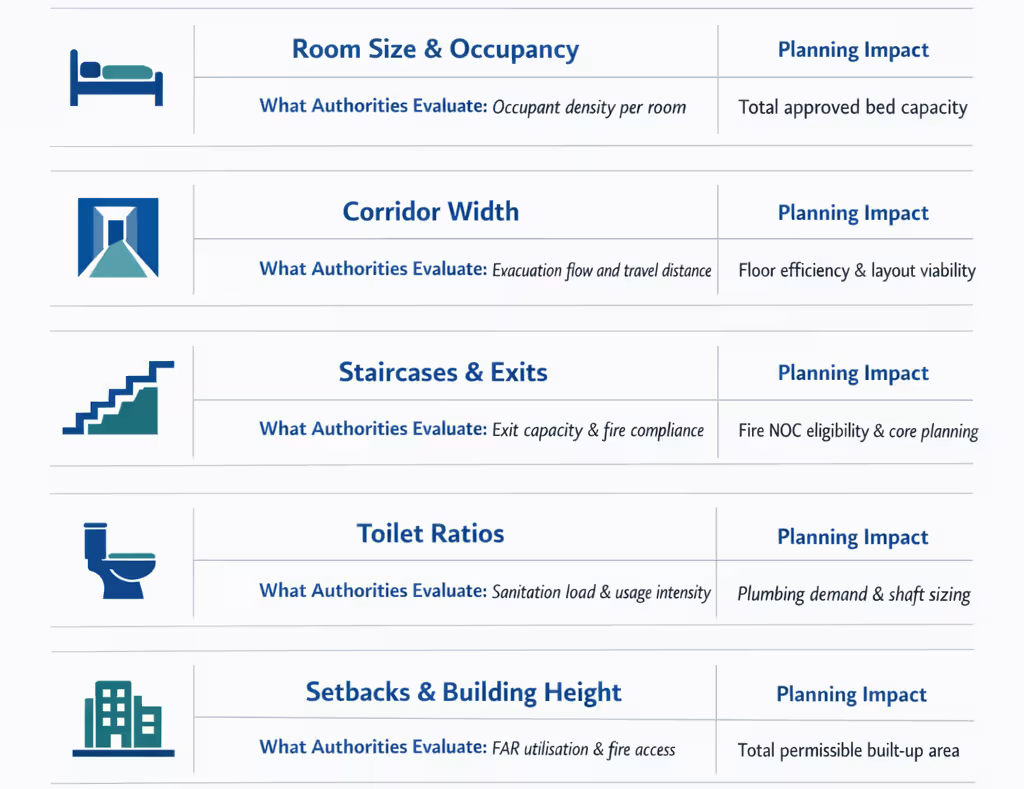
Approval reviews focus less on whether a clause is “met” and more on whether capacity, evacuation, and services remain safe under real use conditions.
This is how hostel projects are evaluated in practice not clause by clause, but by consequences across safety, capacity, and compliance.
Build a high ranking university in India
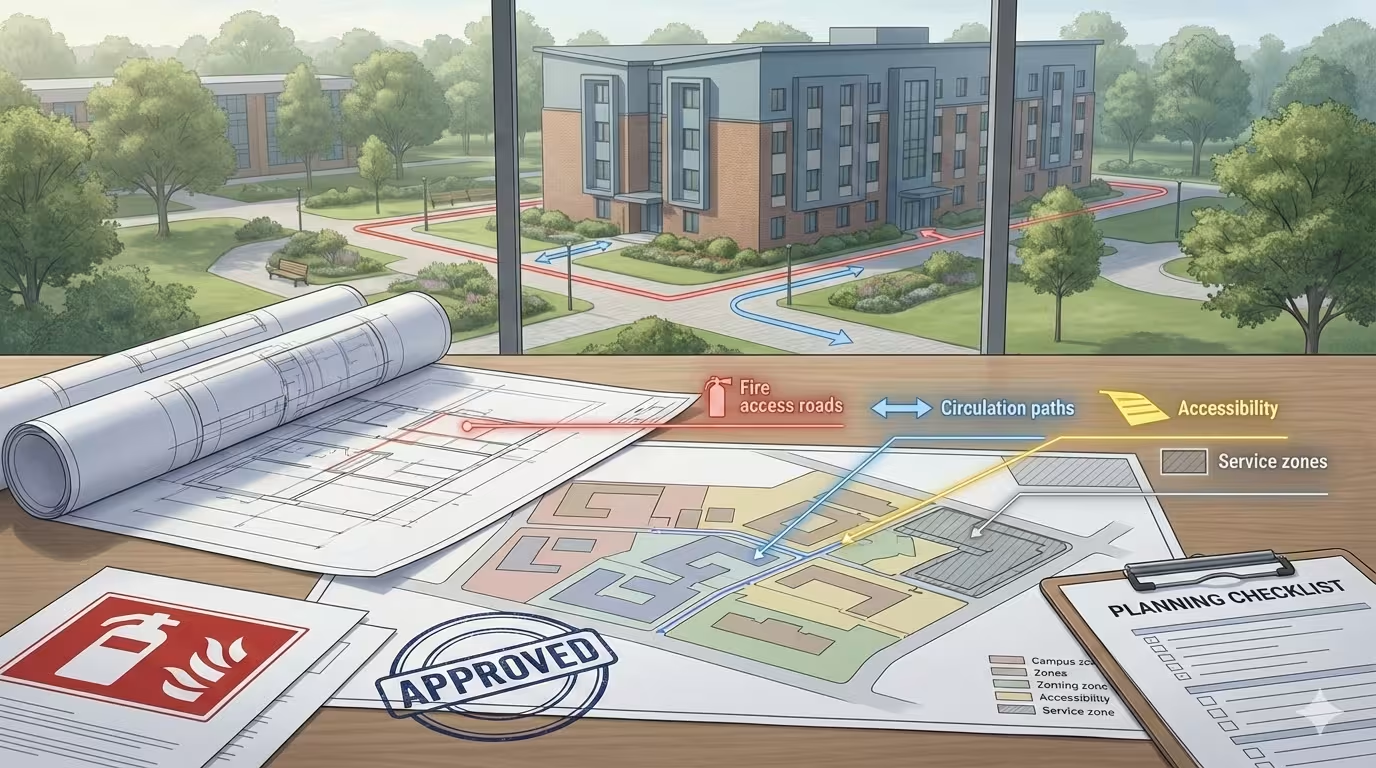
Hostel approvals in India begin at the site planning stage, not at the room or floor-plan level. Planning authorities and fire departments first assess whether the site itself can support an institutional, high-occupancy building before examining internal layouts.
At this stage, authorities typically verify:
Projects that prioritise maximum built-up area at the concept stage often compromise fire access and service movement. These shortcomings usually surface during fire or planning reviews, forcing late-stage massing and footprint revisions that delay approvals and increase cost.
In hostel approval reviews, room layouts are evaluated for occupant density, ventilation, and habitability not merely for carpet area efficiency. Authorities assess whether rooms can safely accommodate the proposed number of residents under continuous, real-world use.
Key expectations commonly reviewed during approvals include:
Over-optimising bed count at the planning stage is one of the most common causes of post-review capacity reduction. During fire or occupancy scrutiny, authorities often:
The result is fewer approved beds after drawings are frozen leading to capacity loss, layout rework, and higher per-bed cost.
Planning room sizes with approval thresholds in mind helps institutions protect sanctioned capacity and avoid late-stage reductions.
Top 10 Hospital Design Requirement in 2026
For hostel projects, Fire NOC is often the most critical and restrictive approval gate. Unlike residential buildings, hostels are evaluated as high-occupancy institutional facilities, which places far stricter demands on evacuation, access, and fire containment.
Fire departments do not review hostels cosmetically. They focus on whether all occupants can evacuate safely under worst-case conditions.
Key aspects typically scrutinised during Fire NOC review include:
In many projects, fire consultants are engaged after architectural layouts are finalised. At this stage, fire review often forces:
These are high-cost corrections that could have been avoided through fire-aware planning before layouts were frozen.
Early alignment between capacity planning, circulation design, and fire evacuation logic is the most reliable way to secure Fire NOC without redesign or capacity loss.
Accessibility is no longer an optional design consideration for hostel projects in India. Hostels associated with educational institutions, NGOs, CSR funding, or public grants are increasingly reviewed against universal accessibility and inclusive design norms during both approval and occupancy stages.
Approval authorities typically assess:
Accessibility compliance is often verified late in the approval cycle, frequently at occupancy or inspection stage. When inclusive design is introduced after layouts are finalised, it commonly leads to:
These corrections are costly and disruptive, and in some cases delay functional occupancy approval.
Integrating accessibility norms at the planning stage allows institutions to retain capacity, control cost, and secure approvals predictably, rather than retrofitting inclusion into a fixed design.
In hostel projects, services planning is not a downstream engineering exercise. It is a core planning decision that directly influences building geometry, structural feasibility, and regulatory compliance. Approval authorities assess whether services infrastructure can safely support continuous, high-occupancy use, not just peak demand assumptions.
Early decisions on services layout directly determine:
When services are under-planned, corrections often require structural modifications, not cosmetic changes.
Authorities and utility agencies typically review:
These checks are often carried out independently by planning bodies, utilities, and pollution control authorities.
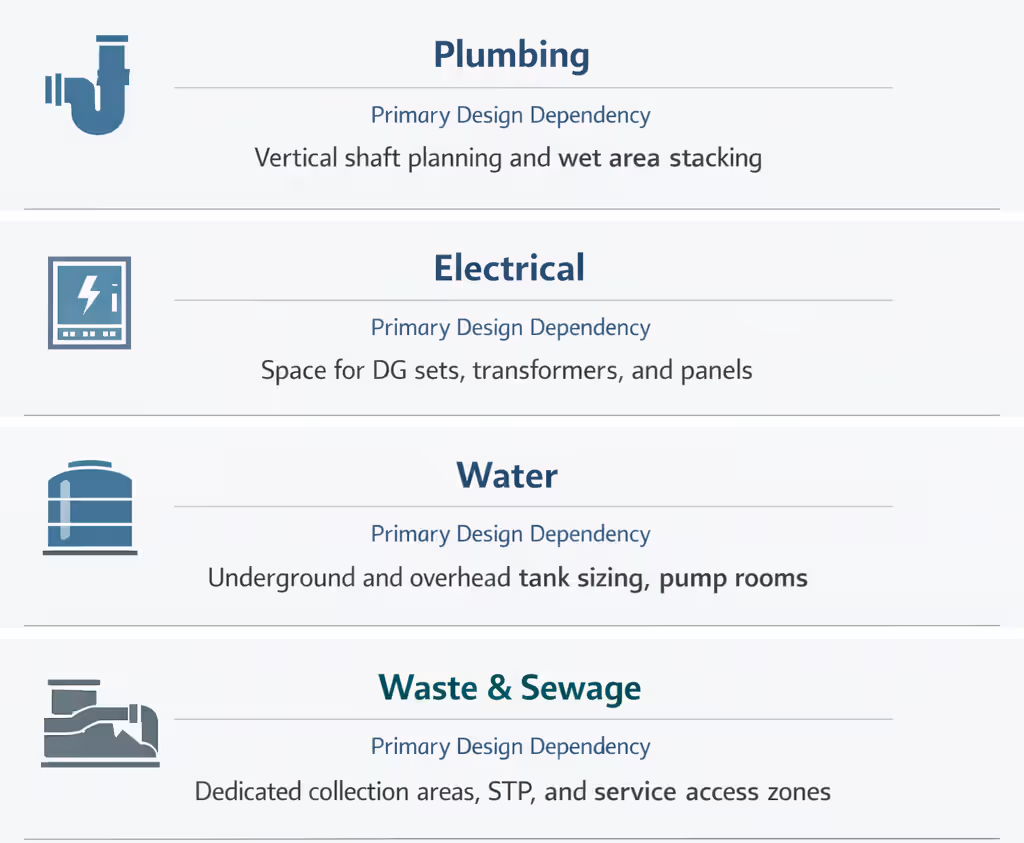
Under-sized shafts and poorly zoned service areas do not just increase cost. They often:
For hostel buildings, where usage intensity is high and margins for error are low, services planning must be aligned with approvals from day one.
Integrating services logic at the planning stage helps institutions secure predictable approvals, protect capacity, and avoid irreversible design constraints.
Professionally planned hostel projects do not begin with drawings. They begin with capacity, approvals, and operational logic, tested before layouts are frozen. This planning-first approach is what prevents redesign, approval delays, and capacity loss later.
This is what distinguishes approval-ready hostel projects from those that require repeated redesign after submission.
Hostel approvals in India follow a multi-stage review process, with different authorities assessing different risks at each stage. Missing or misaligning even one checkpoint often results in conditional sanctions, redesign, or delayed occupancy.
Download the hostel building approval checklist pdf
Planning a hostel building in India is not about fitting rooms into a footprint.
It is about anticipating approvals, understanding regulatory intent, and protecting bed capacity before designs are frozen.
Most stalled hostel projects fail not due to lack of funds or intent, but because approval risks are addressed too late. Projects that plan with compliance in mind move faster through approvals, avoid redesign, and achieve predictable timelines.
Planning a hostel project in India?
BuiltX brings proven experience in approval-led planning for institutional projects, working closely with non-profit organisations across healthcare, education, and cultural infrastructure.
If you want clarity before drawings or budgets are locked, book a free planning call with BuiltX and identify approval risks early.
1. Is there a PDF for planning a hostel building in India?
There is no single official PDF for hostel planning in India. Projects are planned using NBC, state building bye-laws, fire safety norms, and local authority guidelines, applied site-specifically.
2. Can I download student hostel building plans PDF for free?
Standard student hostel building plans are not available for free download. Generic plans rarely meet site-specific approval, fire, and occupancy requirements.
3. What approvals are required to plan a hostel building in India?
Hostel projects typically require building plan sanction, Fire NOC, utility NOCs (water, power, sewer), and occupancy approval, each reviewed by different authorities.
4. Is Fire NOC mandatory for hostel buildings in India?
Yes. Hostel buildings are classified as institutional residential buildings, and Fire NOC is mandatory for most multi-storey or high-occupancy hostels.
5. Why do hostel building plans get rejected during approvals?
Most hostel plans are rejected due to late fire safety coordination, overestimated bed capacity, and treating hostels like residential apartments.