HealthCare
September 28, 2026
Hospital Fire Safety Guidelines India 2026: Design Checklist
A charitable trust in a tier-2 city has secured land for a new hospital. The board has an approximate budget, an interested donor and a broad idea of what it wants: around 100 beds, an outpatient wing and perhaps a diagnostic centre.
Then the questions start arriving:
Each answer affects the others.
A larger building changes the budget. A tighter budget may change the project scope or phasing. Phasing can affect services, approvals and donor commitments. When these decisions are taken separately, often by different people at different times, the project can begin to drift before detailed design has even started.
A Detailed Project Report (DPR) brings these decisions together.
For construction projects, especially hospitals, educational campuses, cultural institutions and donor-funded infrastructure, a DPR is where an idea starts becoming a project that can be designed, funded, approved and eventually built.
IS 1893:2025 vs 2016: What Changed and What Is Currently Applicable?
A DPR, or Detailed Project Report, is a project-planning document that defines what is proposed to be built, why it is needed, how it may be delivered, what it is likely to cost, how long it could take, what approvals may be involved, and how the completed facility will operate.
It is generally prepared after the need and broad feasibility of a project have been established and before the project moves deeply into detailed design, tendering and construction.
A simple distinction helps:
A feasibility study asks: Should we do this, and is it broadly possible?
A DPR asks: If we proceed, what exactly are we proposing, what will it require, and how should it be delivered?
Detailed Project Reports are commonly used across public infrastructure projects in India, and current government project-appraisal frameworks continue to recognise feasibility reports and DPRs as important inputs in evaluating proposed projects.
Private organisations, trusts, NGOs and institutions may not be required to follow one universal DPR format. However, the same planning principle remains useful: major decisions about scope, design, engineering, cost, approvals, implementation and operations should be tested together before substantial money is committed.
For a hospital, medical college, school, university or cultural facility, this coordination can be particularly important because the building has to support specialised operational requirements for many years after construction is completed.
A project has the greatest flexibility during its early stages.
Changing a department layout during concept planning may require a few revised drawings. Making the same change after structure, services and construction packages have been finalised can affect several consultants, contractors and budgets.
A DPR helps project owners make the important decisions while they are still relatively easier to change.
In practice, it can:
The value of a DPR is therefore not simply the report itself.
Its value lies in the decisions that are resolved while preparing it.
Before Appointing a Contractor, See this
There is no single universal DPR format for every private, institutional or nonprofit project.
The contents should reflect the project's size, sector, location and funding model.
However, a good construction DPR generally covers the following areas.
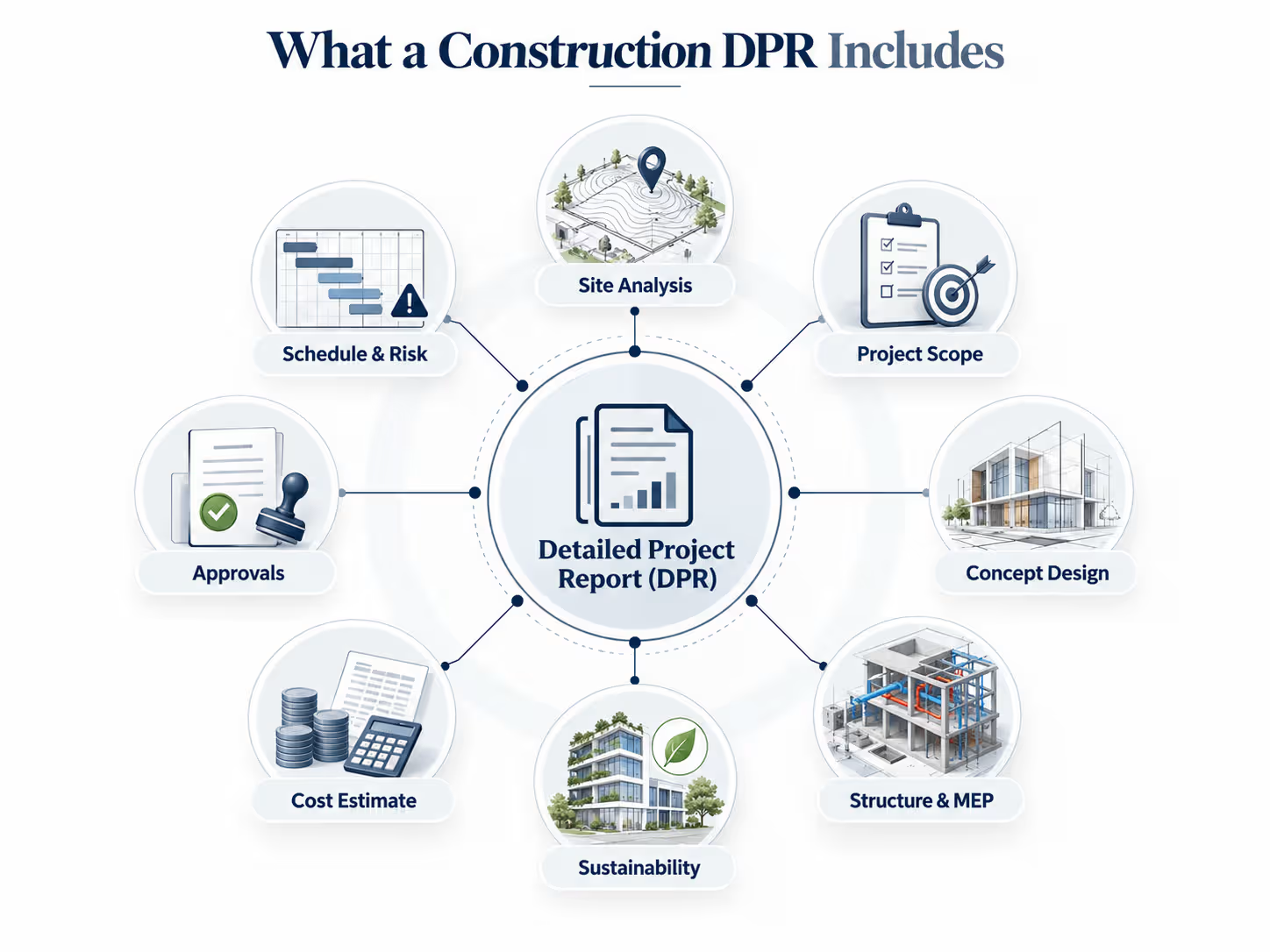
The DPR should clearly explain:
Objectives should be measurable wherever possible.
For example:
"Add 60 inpatient beds and a four-bed ICU"
is much more useful for planning than:
"Improve healthcare infrastructure."
The proposed project size should come from evidence.
Depending on the project, this could include:
This helps prevent both underbuilding and unnecessary oversizing.
The site should be studied before the building layout is treated as fixed.
Important considerations may include:
A geotechnical investigation is also important because soil conditions can significantly affect foundation design and structural cost.
The DPR should clearly state what is included and excluded.
It should also translate operational requirements into an area programme.
For a hospital, this may include OPD, emergency, wards, ICU, diagnostics, operation theatres, administration and support services.
For a campus, it may include classrooms, laboratories, libraries, hostels, dining and sports facilities.
The total area must account not only for usable rooms, but also for circulation, walls, shafts, plant rooms and services.
Generic ratios such as area per bed or area per student can be useful for benchmarking, but they should not replace actual planning.
At DPR stage, concept-level planning may include:
These help test whether the project can realistically fit on the site and whether key functional relationships work.
Structural considerations may include:
MEP planning may include:
Hospital projects may also require:
These systems can occupy significant space and cost. They should not be added later as a generic percentage.
Sustainability decisions are usually more effective when integrated early.
The DPR can consider:
If a project intends to pursue frameworks such as GRIHA or IGBC, that decision should ideally be taken during planning rather than after design is substantially complete.
Likely statutory approvals should be mapped early.
Depending on the project, these may include:
Exact requirements vary by state, city and project type, so they should be verified for the specific project rather than copied from another DPR.
The cost estimate should be connected to the actual scope and systems proposed.
It may include:
Equally important are the exclusions.
If equipment, furniture, land or other costs are not included, this should be clearly stated.
The DPR should also consider cash flow.
For nonprofit and CSR-funded projects, knowing when money will be required can be as important as knowing the total project cost.
The project schedule should account for more than construction.
It may include:
The DPR should also define the likely procurement approach and identify major project risks.
A useful risk register should describe:
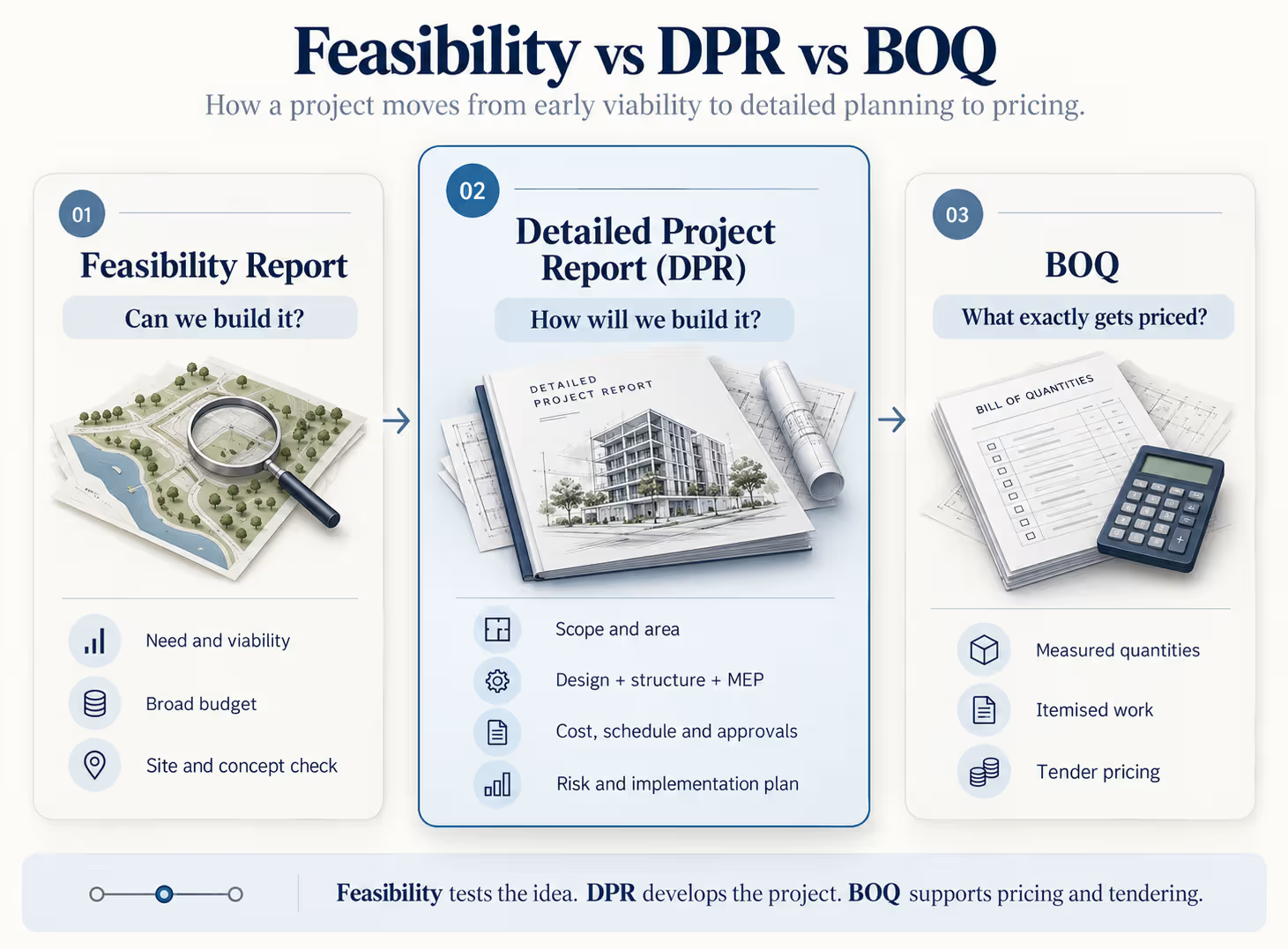
These documents are often confused.
A feasibility study is generally broader and earlier.
A DPR develops the selected project in more detail.
A BOQ comes later and is primarily a construction pricing and procurement document.
An abstract or preliminary BOQ may sometimes form part of a DPR-stage estimate, but a detailed tender BOQ normally requires much more developed drawings.
10 ways to achieve sustainaible design in India in 2026
Consider a charitable trust planning a 100-bed hospital.
Initially, the board may have a budget, a site and a rough per-bed area assumption.
A DPR could reveal several important things.
1) Site: The topographical survey may identify drainage problems or access constraints that change the preferred building location.
2) Space: Once OPD, diagnostics, emergency, ICU, wards, OTs, support services, circulation and plant rooms are calculated properly, the required built-up area may be larger than the original estimate.
3) MEP: Electrical demand, HVAC, medical gases, fire systems and water infrastructure may represent a significant part of the total project cost.
4) Equipment: Imaging systems, operation theatres and other specialised spaces may require structural, electrical and service provisions before equipment is purchased.
5) Funding: A quarterly cash-flow forecast may show that the project should be delivered in phases rather than attempting the entire scope immediately.
The value of the DPR is that these questions are resolved before construction forces the answers.
Perhaps the most damaging mistake is preparing a DPR only because a board or funder has asked for one.
If the real project decisions remain unresolved, the DPR becomes paperwork rather than a planning tool.
The overall DPR framework remains similar across sectors, but the priorities change.
Hospital DPRs may require additional attention to:
Eye hospitals may also need particular attention to high OPD volumes, waiting areas, diagnostics, day-care surgery and OT capacity.
Campus projects may focus more heavily on:
Where an existing campus remains operational, construction may also need to work around academic calendars.
For nonprofit organisations, the DPR plays another important role: creating confidence among boards, donors and CSR partners.
It gives funders a clearer view of:
It can also provide a baseline against which project progress and changes are monitored.
Phased Hospital Construction vs Single-Phase Construction in 2026
Before approving a DPR, boards and project owners should ask:
If several of these answers are unclear, the DPR probably needs further development.
DPR stands for Detailed Project Report. It brings together the scope, planning basis, cost, schedule, technical requirements, approvals and implementation strategy for a proposed project.
No. A feasibility report broadly determines whether a project is viable. A DPR develops the chosen proposal in greater detail and explains how it may be delivered.
There is no universal fee. The cost depends on project size, complexity, specialist consultants, surveys, investigations and the required level of drawings and estimates.
It depends on the project. A straightforward institutional project may take several weeks or a few months, while a hospital, medical college or large campus can take longer because of greater technical complexity and stakeholder coordination.
It may include a preliminary or abstract BOQ for estimating purposes. A detailed tender-ready BOQ is normally prepared later once the design is more developed.
A Detailed Project Report should not exist simply because a funder, authority or board requested one.
Its real purpose is to answer the difficult questions early:
What exactly are we building?
Why this size?
Will it work on this site?
What technical systems are required?
What could it actually cost?
How will it be funded and delivered?
What could delay it?
When architecture, engineering, cost, sustainability, approvals and implementation are considered together early, the project moves forward with greater clarity.
When they are not, unresolved decisions often return later as redesign, delays, variations and cost overruns.
If your organisation is planning a hospital, medical college, educational campus, cultural facility or nonprofit infrastructure project, BuiltX SDC can help you define the project before major decisions become expensive to change.
From feasibility and DPR preparation to design coordination, cost planning and project execution, BuiltX helps project owners connect early planning decisions with what eventually gets built.
Whether you have land and an early idea, an existing DPR that needs review or a funder asking for a credible project plan, the objective is the same:
Define the right project before committing to the wrong one.